Thermal Monitoring Condition Monitoring Blog Electrical
TL;DR
Conveyor slowdowns and jams often look mechanical, when the root cause is usually electrical. Problems inside panels, MCCs, and VFDs degrade quietly for hours or days before a belt drifts or a motor stalls. Continuous condition monitoring catches these upstream signals before throughput is lost:
-
Thermal anomalies inside panels and MCCs that precede trips or insulation breakdown
-
Motor current variability that signals upstream instability or torque loss
-
Intermittent overcurrent events that periodic inspections miss entirely
-
VFD instability that introduces speed inconsistency before a hard fault occurs
Replacing mechanical components without addressing upstream electrical instability doesn't fix the problem — it masks it.
The Electrical Root Cause Behind Most Conveyor Jams
When a conveyor slows in a fulfillment centre or a tray sorter stalls in a parcel facility, the visible symptom is mechanical. The root cause often is not.
Loose terminations inside a motor control center (MCC), voltage imbalance at a VFD, or thermal rise on a fuse holder can begin degrading hours—or days—before a belt misaligns or a tail roller overheats.
In high-throughput logistics environments, condition monitoring for electrical systems is foundational to conveyor reliability. By the time a jam occurs, the electrical degradation window has already closed.
Most mechanical symptoms in merge lines, gapper sections, and tray sorter discharge points are secondary effects. Electrical instability upstream reduces torque consistency, increases current variability, and introduces heat into energized infrastructure long before maintenance teams see a stalled belt.
The failure starts inside the panel.
What Is Condition Monitoring for Electrical Systems?
Condition monitoring for electrical systems is the continuous measurement of thermal, current, and voltage signals inside energized infrastructure such as panels, MCCs, switchgear, and VFDs to detect progressive degradation before failure occurs.
It enables early electrical fault detection, improves intervention timing, and reduces unplanned conveyor downtime by identifying instability during the degradation phase rather than after shutdown.
.jpg?width=585&height=468&name=0001_IR%20(1).jpg)
Why Condition Monitoring for Electrical Systems Must Be Continuous
Electrical degradation is progressive and rarely presents as an immediate failure.
Common upstream failure modes inside energized infrastructure include arcing at a loose termination, thermal overload on a fuse holder under sustained load, MCC overheating during peak demand, voltage imbalance at a drive reducing motor torque, and high-resistance connections inside switchgear.
In a one million square foot fulfillment centre, a ninety-minute sorter outage can exceed seventy-five thousand dollars in throughput exposure. Many of these disruptions originate in electrical instability rather than mechanical breakdown.
Periodic infrared inspections provide snapshots. Electrical instability is often intermittent. A voltage imbalance or overcurrent condition may only appear during load transitions, high-volume sort cycles, or peak seasonal throughput. If measurement is not continuous, the degradation pattern remains invisible.
That invisibility creates reactive maintenance.
Condition monitoring for electrical systems closes that visibility gap by capturing trend deviation as it develops—not after protective devices trip.
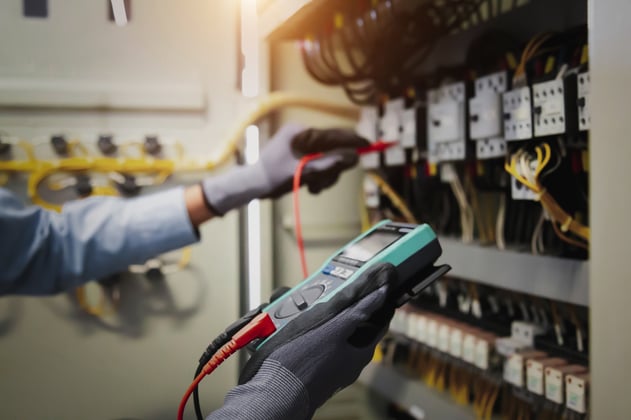
Key Signals in Electrical Condition Monitoring
Effective electrical condition monitoring focuses on deviation over time rather than isolated threshold alarms.
-
Thermal anomalies inside panels, MCCs, or switchgear lineups often precede insulation breakdown or trip events. A sustained temperature delta at a lug, breaker, or bus connection is rarely random.
-
Motor current variability greater than five to ten percent under stable load conditions suggests upstream instability, winding stress, or torque loss affecting conveyor performance.
-
Intermittent overcurrent events that appear unpredictable frequently correlate with progressive degradation developing inside the enclosure.
-
Minor VFD instability can introduce speed inconsistency across merge lines and tray sorter discharge sections before a hard electrical fault occurs.
Individually, these signals may not trigger alarms. When trended continuously through condition monitoring for electrical systems, they reveal progression within the intervention window. This is where electrical fault detection for panels and MCCs becomes actionable rather than reactive.
Continuous vs. Periodic Electrical Monitoring
The difference between reacting and planning is continuity.
Periodic inspection delivers a static view and depends on scheduled walkdowns. Intermittent degradation developing between inspection intervals remains undetected.
Continuous electrical equipment monitoring provides around-the-clock thermal and current visibility. It captures degradation during real operating load instead of simulated inspection conditions.
As automation density increases in sortation hubs, detection windows compress from weeks to days. Quarterly inspection cycles cannot keep pace with faults that develop during a single peak period. Remote condition monitoring maintains persistent visibility across energized infrastructure without disrupting operations.
Electrical condition monitoring solutions must operate safely within live panels and switchgear environments while delivering radiometric thermal data and synchronized current measurement.
Without continuity, early threat detection is not possible.

Diagnostic Framework When a Conveyor Slows
Before replacing another belt tensioner or roller assembly, validate upstream electrical conditions.
Identify recent slowdown or jam events. Review motor current analysis ten minutes before and after each event. Confirm load consistency across the merge or gapper line. Correlate findings with VFD instability logs. Review panel thermal trend data for abnormal temperature rise.
If current variability precedes the mechanical symptom, the root cause is electrical rather than mechanical.
Replacing mechanical components without correcting upstream instability increases downtime frequency and accelerates bearing wear, belt drift, and tail-roller overheating. It also masks the underlying degradation developing inside the MCC or panel.
Condition monitoring for electrical systems changes the diagnostic order. It prioritizes electrical validation before mechanical replacement.
Electrical Condition Monitoring in Logistics and Distribution
In parcel facilities and fulfilment centres, single-point-of-failure assets include conveyor drive motors, MCC cabinets feeding merge lines, switchgear supplying automation cells, and VFDs controlling high-speed tray sorters.
When degradation occurs upstream of these systems, symptoms often include repeated manual resets, inconsistent conveyor speed, intermittent jams under normal load, or unexplained breaker trips.
Continuous condition monitoring for electrical systems detects arcing, MCC overheating, voltage imbalance, and overcurrent trends before escalation. It augments existing CMMS and EAM workflows rather than replacing them.
For lean reliability teams managing large automation footprints, early detection reduces troubleshooting time, limits emergency callouts, and stabilizes maintenance planning.
What Effective Condition Monitoring for Electrical Systems Looks Like
Reliability teams evaluating deployment should prioritize:
- Always-on monitoring inside energized panels and switchgear
- Radiometric thermal measurement instead of colorized imaging
- Trend-based deviation detection beyond static thresholds
- Multi-sensor corroboration across thermal and current signals
- Integration with established maintenance systems
If you're responsible for reliability in a high-throughput environment and are consistently being surprised by downtime caused by electrical failures, it might be time to consider how early electrical fault detection could help convert unplanned disruptions into scheduled interventions.
Keep reading
Thermal Monitoring Condition Monitoring Blog
How We Taught Solar Monitoring to Stop Mistaking Reflection for a Fault

Condition Monitoring Reliability Engineering Blog