Warehousing, Distribution & Logistics

Continuous condition monitoring for high-volume distribution and fulfillment centers. Detect conveyor, sorter, and drive failures before they stop your lines.

Catch conveyor, sorter, and drive failures before they stop your lines.

Most distribution centers don’t lose throughput because they lack alarms. They lose it because they find out too late. Conditions that precede a sorter stoppage, a drive trip, or a belt failure develop over hours or days - but today’s inspection cycles and threshold-based alarms don’t detect them until the line is already disrupted.

MultiSensor AI provides continuous condition monitoring for high-volume distribution, fulfillment, and logistics environments. By continuously capturing thermal, vibration, visual, and environmental signals across conveyors, sorters, drives, and electrical systems, MSAI Connect detects degradation as it develops — giving your team time to act before a wave is missed, a cutoff is blown, or 120 workers are standing idle.
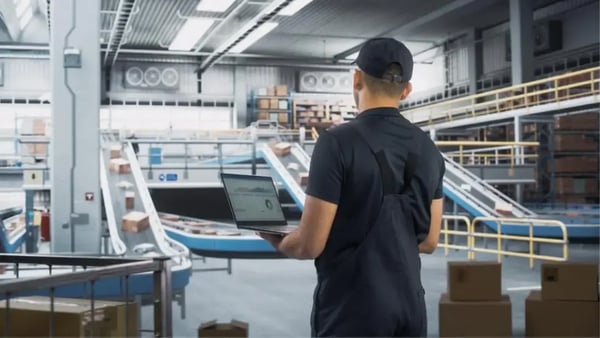
Laptop Computer in Distrubution Center, Monitoring the Conveyors  (1)
img-22
Early detection that keeps orders moving

MSAI Connect catches belt tension issues, bearing wear, motor overheating, misalignment, and stuck items hours or days before they cause cascading delays across the fulfillment line.
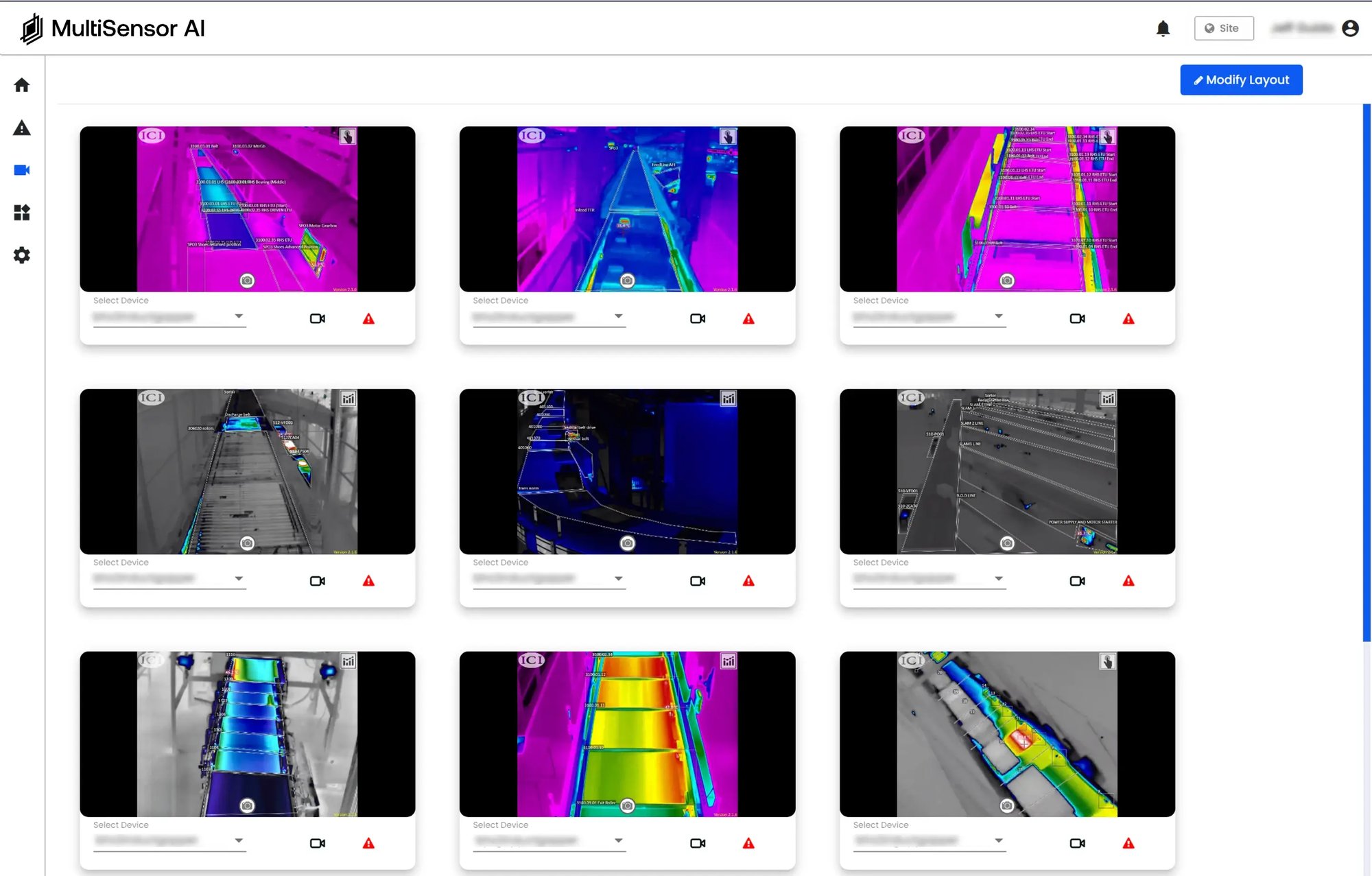
2nd ICI MSAI Connect dashboard from Joes PPT
Unified visibility across automated material handling systems

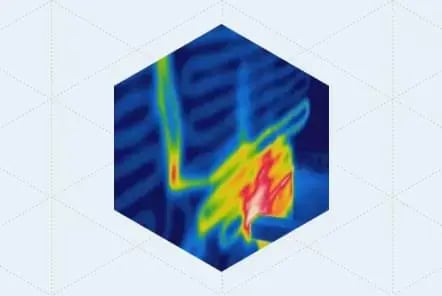
Thermal, vibration, visual, and OGI feeds stream into one platform, giving operations and RME teams a clear view of emerging risks across conveyors, sorters, gapper beds, diverters, shuttles, and AMR charging zones.

img-24
Less manual inspection, more safe automation

Continuous condition monitoring reduces the need for hot-walk inspections, lowers exposure to high-speed equipment, and keeps technicians focused on the issues that actually matter.

The Performance Gap

Most distribution centers run reactive until the line stops

Across high-volume distribution and fulfillment environments, the majority of equipment failures are discovered the same way: throughput drops, a jam escalates, or an operator calls it in. By that point, the detection window has already closed..

<20% of failures are detected before a hard stop

Typical distribution center - reactive until the alarms fire 

30-120 min 

Average time to detect (TTD)

Top quartile achieves 5-15 min.

$10k - $40k

Cost per hour - primary conveyor spine.

Up to $150k+/hr for high-speed sorter at peak.

20 - 40 hours

Unplanned MHE downtime per month

Top quartile: 5 -10 hours

ENVIRONMENT

Why are distribution centers high-risk for undetected degradation?

Retail DCs and fulfillment centers share a set of structural conditions that make traditional monitoring approaches fundamentally insufficient:

  • single-point-of-failure architecture: when it goes down, everything downstream stops
  • high automation density: failures are harder to isolate than in manually-operated environments
  • compressed detection windows: fast-moving failure modes like belt misalignment progresses rapidly to hard failure within hours
  • peak seasonality exposure: the cost of a downtime event during peak is 3–8x the off-peak cost
  • calendar-based inspections miss fast-developing faults
DETECTION COVERAGE

What MSAI Connect detects - and where 

MSAI Connect provides continuous condition monitoring across the highest-risk assets in your distribution environment. These are the failure modes that traditional inspection and alarm-based systems consistently miss.

failures modes detected with continuous monitoring in distribution center
Belt Conveyors & Trunks

Belt mistracking, bearing wear, splice degradation, motor overheating — detected before jams escalate or a main artery stops.

High-Speed Sorters

Drive section overheating, carrier/belt wear, induction interface faults — detected before recirc spikes or sorter slows into survival mode.

MCCs & VFDs

Loose terminations, capacitor aging, overheating from poor ventilation — the class of problems that cause random trips and cascade across conveyor sections.

Merge & Divert Clusters

Actuator wear, sensor alignment drift, belt degradation — where small faults become constant jams and missorts before anyone calls it a failure.

Control Cabinets (PLCs, IO)

Cabinet temperature anomalies, power quality events, grounding issues — the “random stop” problems that consume controls time and are hardest to reproduce.

Spiral Conveyors & VRCs

Bearing and drive degradation in vertical transitions — single points whose failure chokes an entire level and carries long TTR.

Singulators & Induction Systems

Mechanical looseness, sensor drift, motor overheating — chronic capacity limiters that don’t generate hard alarms until throughput is already degraded.

UPS & Critical Power

Battery degradation, overload conditions, transfer switch issues — rare but catastrophic; degradation is mostly invisible until a hard event occurs.

DOCUMENTED RESULTS

Detection that translates to downtime.


The following outcomes have been documented in high-volume distribution and fulfillment environments.

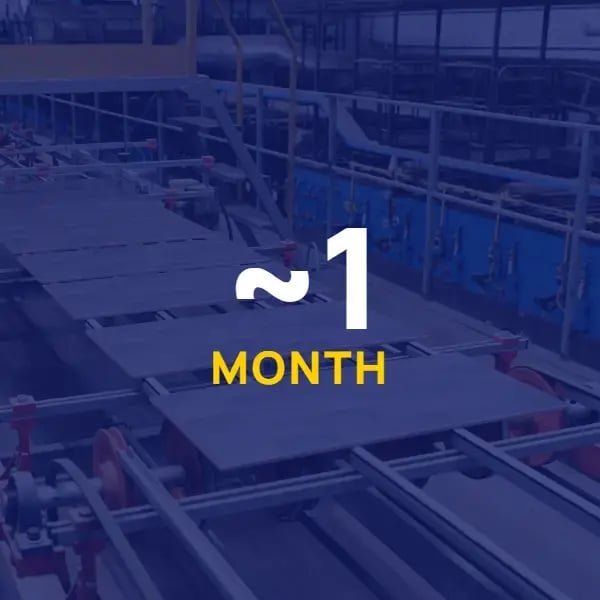
01-1-month-1

Full ROI achieved after detecting early-stage failures across critical conveyance assets in a Fortune 50 distribution facility — enabling repairs during planned downtime windows.

02-18k-1

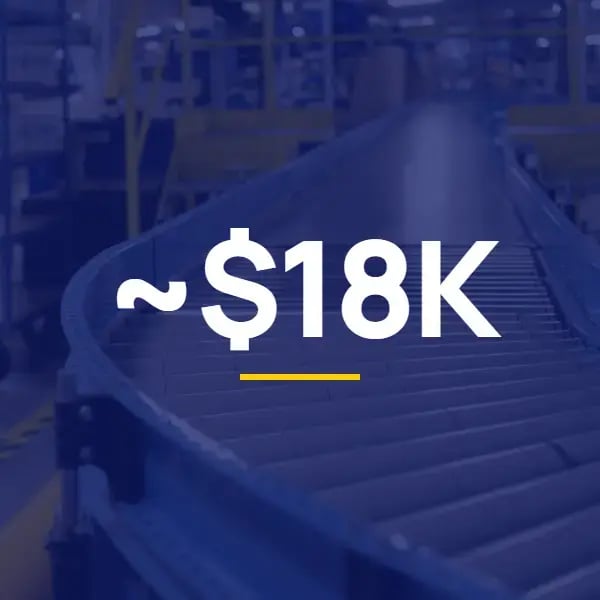
Labor costs avoided by detecting belt misalignment in a single-point-of-failure conveyor system before it caused ~3 hours of downtime impacting 120 workers.
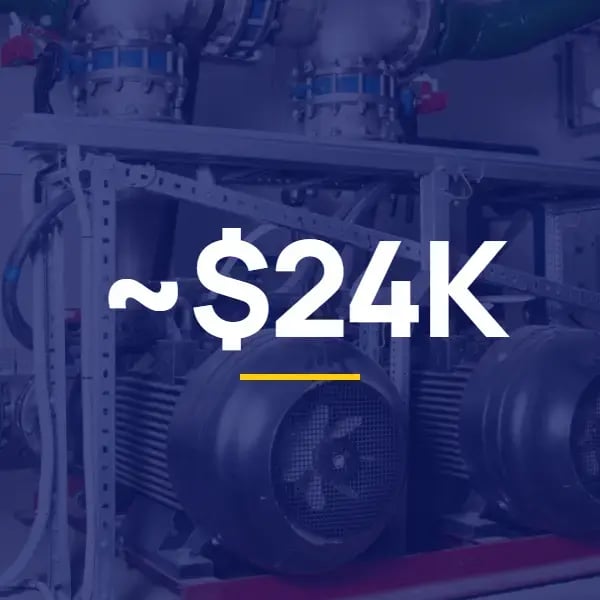
03-24k-1

Operational impact avoided after detecting friction from trapped material in a conveyor system — preventing a high-severity failure and ~4 hours of downtime.
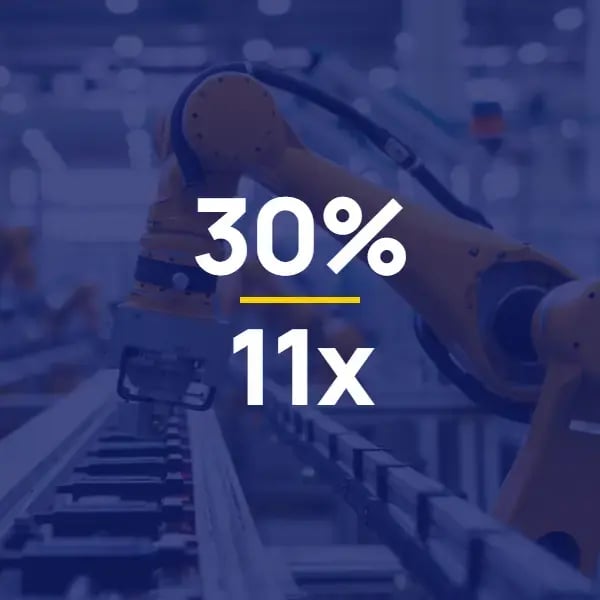
04-30pct-11x-1

Downtime reduced by ~30% and throughput increased by over 11x through early detection of conveyor system issues in automated fulfillment operations.
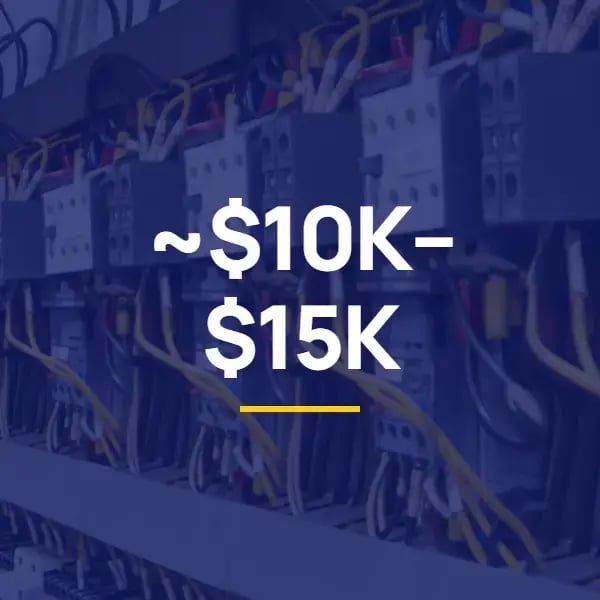
 

05-10k-15k-1

Per-incident savings from identifying overheating motors and belts before failure in a high-throughput fulfillment center

What MSAI Connect is - and how it works

MultiSensor AI is a multi-sensor condition intelligence platform for highly automated, uptime-critical industrial environments. MSAI Connect — the platform — sits above your existing sensors, controls, and CMMS as an intelligence layer. It does not replace your systems. It gives them early warning. It filters thermal, vibration, environmental, and visual sensor signals through AI plus expert verification, surfacing only actionable issues with clear next steps.

Instead of sending techs on manual rounds, teams receive concise, confidence-rated alerts that direct them to the right zone, with enough lead time to schedule repairs without pulling conveyors offline or disrupting SLAs.

With vibration monitoring, teams can also detect early mechanical degradation in sortation drive motors, gearbox bearings, and mainline conveyor assemblies, where abnormal movement can develop before a clear heat signature appears. 
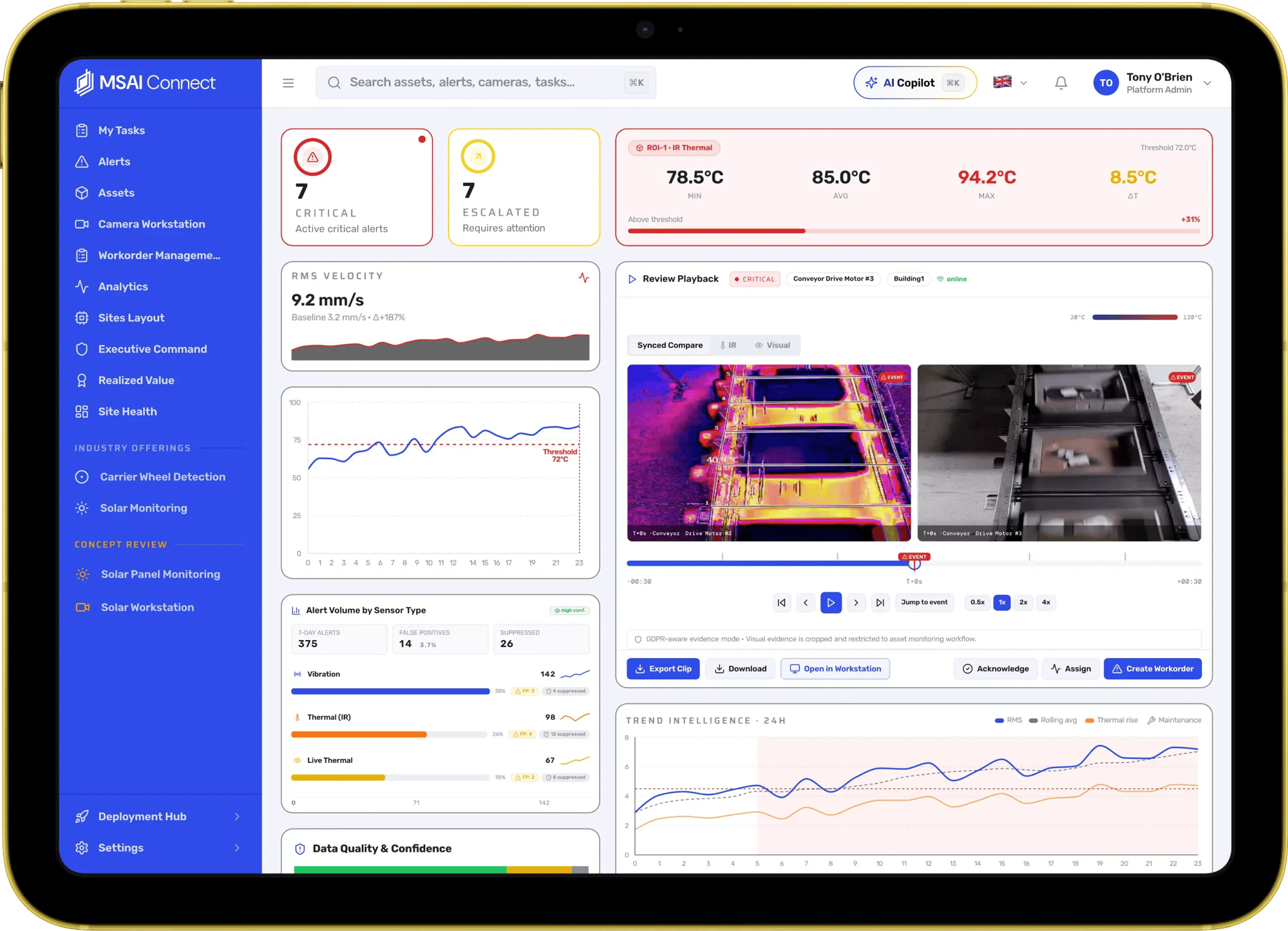
MSAI – Connect Continuous Monitoring Software Dashboard [iPad]
DEPLOYMENT

Built for lean teams. No change management required. 

  • No changes to existing standard work procedures or maintenance workflows
  • Does not replace your CMMS, SCADA, PLC, or WCS systems
  • Subscription-based model eliminates hardware CapEx — operational investment with a short payback window, not a capital project requiring board-level sign-off
  • Deployment follows a pilot-to-scale model: start on highest-risk assets, validate detection against real failures, expand across site or network
  • Human-validated signal calibration during deployment accelerates adoption and reduces alert noise from day one

Frequently asked questions.

What does conveyor condition monitoring with MSAI Connect actually cover?

At the core, it's conveyor condition monitoring: continuous thermal and visual monitoring, with vibration available as an add-on, across the assets whose failure stops the facility. That includes high-speed sorters, MCCs and VFDs, induction and singulation systems, mainline and merge/divert conveyors, drive motors, gearboxes, and bearings. Coverage is built around single-point-of-failure exposure, not blanket sensor placement.

Is MSAI Connect a predictive maintenance system?

Not in the full sense of forecasting remaining useful life. MSAI Connect detects early degradation, such as abnormal heat buildup or bearing wear, and gives your team a detection window of hours to days before failure. That's early degradation detection and proactive maintenance, not a system that tells you exactly when a part will fail or takes action on its own. The decision and the fix stay with your team.

Does this replace our CMMS or WMS?

 No. MSAI Connect sits above your existing systems and can push alerts and work order triggers into your CMMS. It doesn't manage the full work order lifecycle, parts logistics, or maintenance execution. Think intelligence layer, not system replacement. 

What equipment can condition monitoring work with?

Any asset that gives off a measurable signal as it degrades: motors, bearings, gearboxes, conveyors, compressors, pumps, fans, electrical panels, switchgear, and drives are among the most common. The right sensing method—thermal, vibration, environmental, or electrical—depends on the asset and its failure modes.

How is this different from a quarterly thermal survey or a handheld vibration route?

 A quarterly thermography walk or a monthly vibration route is a snapshot. Bearing wear, misalignment, and heat buildup can develop and worsen in the weeks between visits, and on a sorter or induction system that's often too late. MSAI Connect is a continuous feed on multiple signal types, so degradation gets caught between inspection cycles, not after the next one.

 Do we need vibration monitoring if we already have thermal, or vice versa? 

 They catch different things on the same asset. Thermal picks up electrical resistance and overheating. Vibration picks up bearing wear, imbalance, and misalignment, often before any heat shows up. Vibration is built as an add-on to thermal inside MSAI Connect, not a separate standalone product, because the two signals corroborating each other is what makes an alert worth acting on. 

How much warning do we actually get before something fails?

Typically hours to days, depending on the asset and failure mode. That's enough runway to schedule the fix during a planned maintenance window instead of reacting to a hard stop mid-shift. 

Do we need to hire a reliability engineer to run this?

No. MSAI Connect is built to operate inside your existing maintenance workflow. No new standard work, no dedicated reliability engineering headcount required. That's by design, since most distribution and fulfillment teams are already lean.

We already use a vibration-only vendor. Why would we need MSAI Connect?

If all you want is deep, standalone vibration diagnostics, a vibration-first vendor may be the better fit. MSAI Connect is built for teams that want thermal and vibration working together in one platform, one workflow, one set of validated alerts, across both electrical and mechanical risk.

Will this just create more alerts for our team to chase?

The opposite is the goal. MSAI Connect corroborates signals across sensor types before an alert escalates. If thermal and vibration agree, the alert is credible. If they don't corroborate, it doesn't escalate. That's fewer false positives, not more noise.

What's the deployment lift? Is this a capital project?

 Hardware is sized for site-level approval, not a board-level capital ask, and the subscription runs as predictable OPEX alongside it. The more useful question for budget conversations: what does your next unplanned sorter or conveyor stoppage cost, compared to this investment.