Investment in smart warehouses cannot stop at the automation layer itself. The condition monitoring strategies protecting those environments must evolve at the same pace as the systems they support.
This article was originally published at SupplyChainBrain.
By Asim Akram, CEO, MultiSensor AI
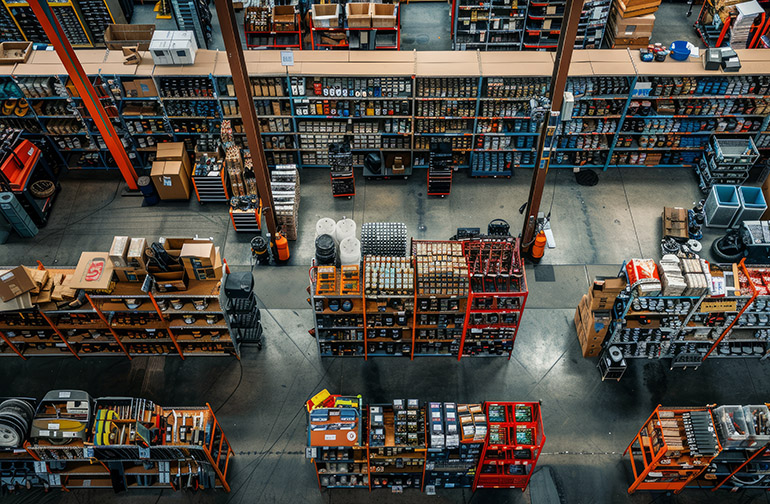
Smart warehouses and distribution centers operate with almost no tolerance for disruption. The same automation systems driving higher throughput also increase the operational and financial impact when critical infrastructure fails. And a single sortation drive, MCC cabinet or electrical distribution panel issue can idle more than 100 workers within minutes.
Based on data observed across high-throughput distribution environments, MultiSensor AI estimates that a typical unplanned stoppage can cost between $12,000 and $24,000 when accounting for labor stand-down, recovery time and lost throughput — even before considering downstream SLA exposure and cascading operational delays.
In modern fulfillment environments, even a short-duration stoppage can ripple across labor scheduling, outbound commitments, transportation timing and customer delivery expectations.
The challenge is that many condition monitoring strategies deployed inside warehouses today were designed for slower, less interconnected operating environments. Facilities evolved faster than the monitoring approaches intended to protect them.
At the same time, distribution operators are under increasing pressure to move more volume with leaner labor models, tighter delivery windows and higher automation dependency. As facilities become more interconnected, the operational impact of a single undetected failure grows disproportionately larger
Smart Warehouse Complexity Is Outpacing Visibility
Warehouse automation continues to accelerate, but operational visibility has not kept pace. The same automation technologies driving higher throughput and efficiency are also making failures harder to detect, isolate and prevent.
Most distribution facilities are adding automation and operational complexity faster than their monitoring infrastructure can evolve. According to a recent report from Interact Analysis, approximately one in four warehouses now operates with some form of automation, yet only a small percentage leverage advanced monitoring and operational intelligence systems.
In highly automated distribution centers, failures rarely remain isolated. A single degraded component can disrupt upstream flow, block downstream processes and significantly reduce outbound throughput during critical sort windows. Problems that may once have remained contained within a manual pick operation can now impact an entire facility within minutes.
Automation improved throughput, but it also reduced direct operational visibility into degrading equipment. Critical infrastructure that was once physically accessible now operates continuously behind guards, panels, enclosed systems and automated processes. At the same time, leaner labor models mean fewer personnel are physically present to observe subtle changes in equipment condition. As a result, degradation has more opportunity to progress unnoticed between inspections.
Most monitoring strategies deployed today were not designed for this level of operational interconnectedness. They were built for a slower, less automated environment.
The Hidden Gaps in Existing Monitoring Systems
Most distribution centers already operate with some level of monitoring in place — PLC alarms, scheduled thermography and route-based vibration inspections. The challenge is not the absence of monitoring, but the speed and complexity of modern automated operations.
Automation fundamentally changes the failure equation. PLC alarms activate at predefined thresholds, which often means the operation is already reacting to disruption rather than preventing it.
Scheduled inspections create another limitation. They capture periodic snapshots of systems that operate continuously. If a conveyor belt begins tracking off-center on a Tuesday, a Friday inspection may already be days behind the progression of degradation. During that time, heat buildup, bearing wear, motor strain or electrical imbalance may continue accelerating toward failure unnoticed.
As distribution environments become more densely automated and operationally interconnected, the tolerance for delayed detection continues to shrink while the operational consequences of failure continue to expand.
Single-sensor monitoring also creates critical blind spots. Vibration monitoring may detect mechanical wear while missing electrical degradation. Thermal imaging may identify abnormal heat signatures but not control logic or process-related anomalies. In highly interconnected systems, these visibility gaps compound quickly
Where the Monitoring Gap Shows Up
Most unplanned downtime inside automated distribution facilities originates from familiar failure points. The same systems repeatedly emerge because they operate under the highest mechanical, electrical and operational stress.
- Belt mistracking: Friction and heat build gradually inside enclosed conveyor systems, often remaining invisible until a jam, shutdown, or sensor trip forces intervention.
- VFD degradation: Variable frequency drives powering conveyor and sortation systems accumulate thermal and electrical stress long before a fault condition is triggered.
- MCC cabinet overheating: Heat develops inside electrical infrastructure coordinating automated operations, often in areas that are difficult to access consistently through manual inspection routes.
- Electrical resistance at panel connections: Power distribution components can progress toward failure silently, with no visible indication until a trip event or major operational disruption occurs.
The challenge is not that these failures happen suddenly. Most develop progressively between inspection cycles and below traditional alarm thresholds.
A conveyor motor may pass inspection in the morning and begin overheating later that afternoon due to friction, load imbalance, or airflow restriction. A bearing entering early-stage degradation may continue operating for hours or days before the next inspection route identifies the issue.
This is the fundamental mismatch inside highly automated facilities: Systems now fail continuously and dynamically, while most monitoring approaches still operate periodically and reactively
How High-Performing Smart Warehouses Close the Gap
Operators maintaining uptime inside highly automated facilities are approaching asset visibility differently. They are shifting from periodic inspections to continuous condition intelligence, providing persistent visibility into asset condition while systems remain operational.
That visibility begins with the infrastructure whose failure immediately impacts downstream flow, including sortation drives, choke-point conveyors, MCC cabinets, VFDs and the electrical systems supporting automated movement throughout the facility.
In these environments, detection timing matters as much as the detection method itself. A VFD developing thermal stress over 48 hours will likely go unnoticed in a weekly inspection cycle. Continuous monitoring identifies degradation while there is still time to plan intervention before throughput is affected.
The most effective monitoring strategies also combine multiple condition signals rather than relying on a single data source alone. When thermal, acoustic, electrical and vibration indicators all point to the same asset, alerts become more actionable and operational confidence increases. When monitoring depends on isolated signals, teams hesitate. And in high-throughput operations, hesitation becomes expensive quickly.
As warehouse automation scales, delayed visibility rapidly becomes operational risk. Today, continuous insight into asset conditions is becoming foundational infrastructure for modern automated operations.
Investment in smart warehouses cannot stop at the automation layer itself. The condition monitoring strategies protecting those environments must evolve at the same pace as the systems they support.
The operators getting this right are identifying degradation while equipment is still running and converting emergency failures into planned interventions. The ones that are not are still discovering on Friday what started failing on Tuesday.
As warehouse automation continues to evolve, operational resilience will increasingly depend on how quickly facilities can detect, interpret and respond to early signs of degradation. In highly automated environments, visibility is no longer simply a maintenance function. It is becoming a core operational capability.
This article was originally published at SupplyChainBrain: https://www.supplychainbrain.com/blogs/1-think-tank/post/44137-the-visibility-gap-inside-smart-warehouses