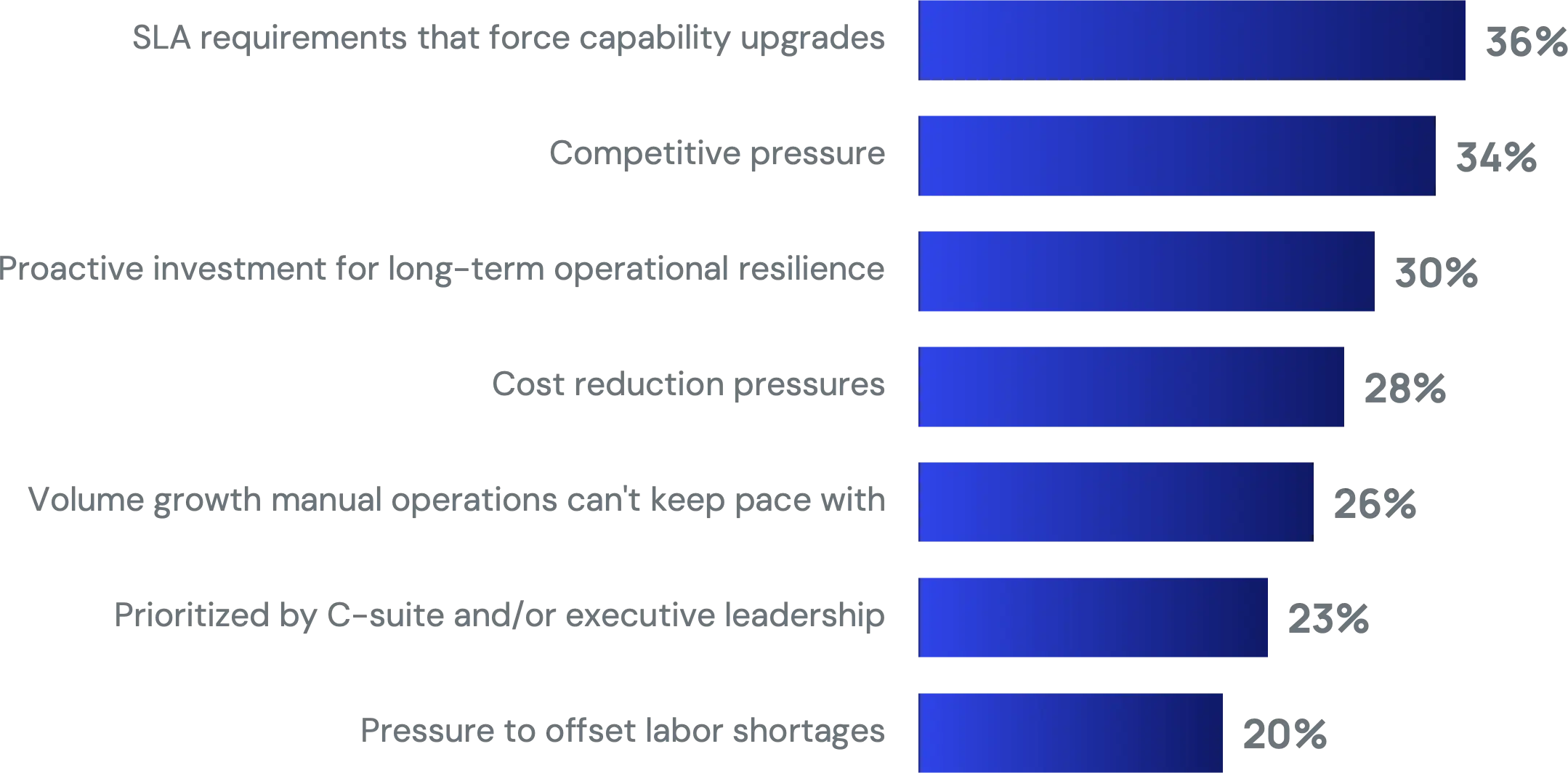
Automation has accelerated across sortation, conveyor, and fulfillment operations, and it isn't slowing down. But investment in the maintenance and condition monitoring needed to keep that automation running hasn't kept pace. Most operators know it, and many are automating anyway.
of practitioners and VPs have knowingly approved or implemented automation their team wasn't ready to maintain.
say it's happened more than once.
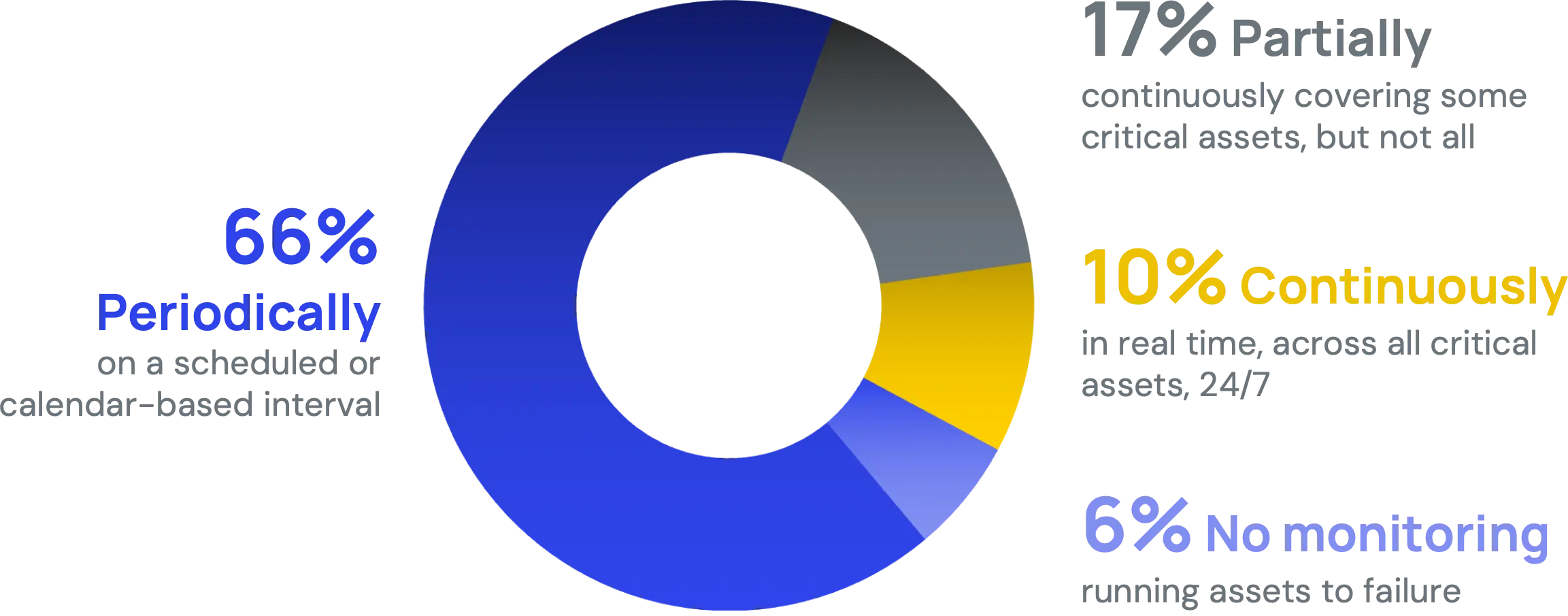
Most reliability teams believe their condition monitoring program will catch a failing asset before it causes unplanned downtime. In practice, that confidence rarely gets tested until after something breaks. Warning signs get seen, and sometimes flagged, but without continuous condition monitoring in place, they don't get acted on until the asset has already gone down.
of practitioners have missed a warning sign on an asset that later caused unplanned downtime.
of facilities have at least one asset that represents a true single point of failure—an asset that could halt distribution or fulfillment operations if it goes down.
experienced six or more unplanned downtime events affecting fulfillment, sortation, or distribution operations in the past 12 months, and 98% had at least one.
Luke Grice-Lowe Director of Reliability & Maintenance Programs MultiSensor AI“Degradation and failures don't wait to emerge until the next scheduled inspection. If you're only checking assets on a calendar basis, you're guaranteed to miss problems that develop between inspections.”
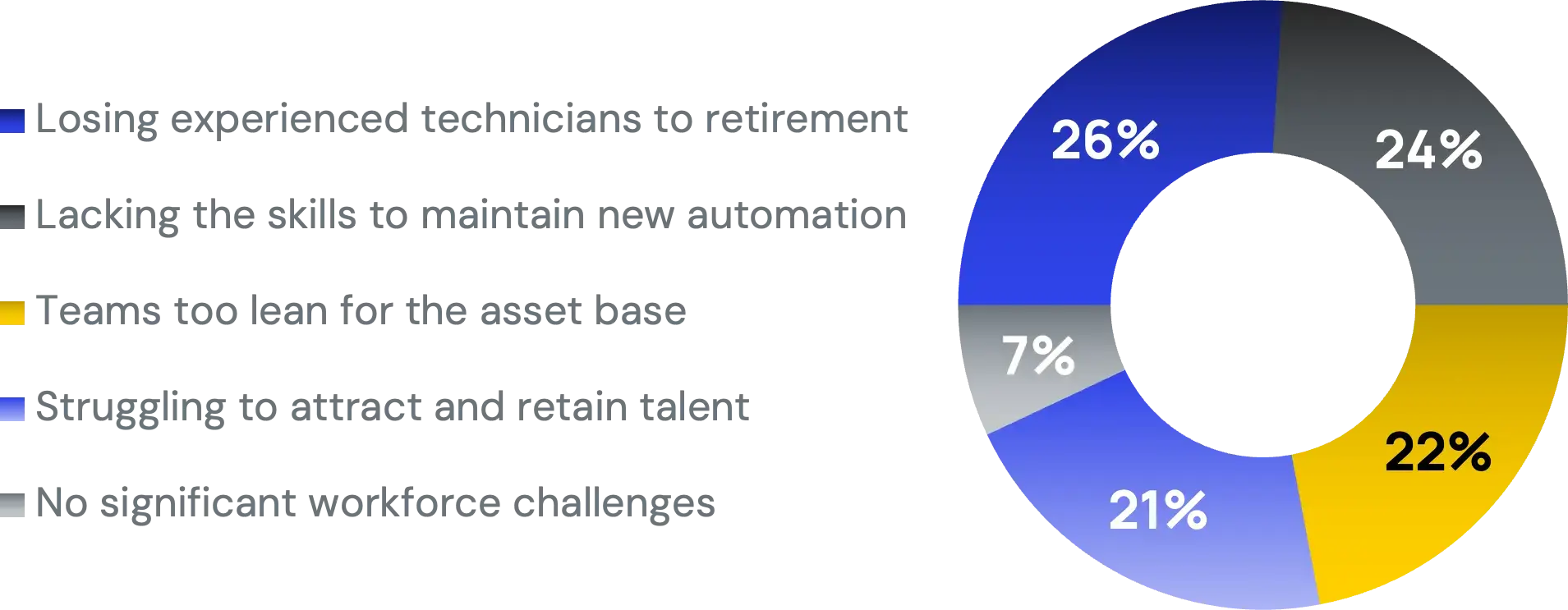
The reliability workforce responsible for condition monitoring and maintenance is stretched thin, and the uptime data they generate rarely reaches the executives who control the budget to close the gap. That disconnect leaves facilities exposed at exactly the moment automation investment is accelerating.
of VPs say their facility doesn't track uptime at the executive or board level, despite a major downtime event potentially costing a full year of automation investment.
This page covers the headline findings. The full 22-page report includes the complete workforce and financial-exposure data, five concrete steps organizations can use to close the reliability gap, and the full survey methodology.
More than most operators expect. In MultiSensor AI's 2026 survey of 152 reliability practitioners and operations leaders, 98% experienced unplanned downtime in the past year, and 80% had six or more separate events affecting fulfillment, sortation, or distribution operations.
Automation outpacing maintenance readiness is a leading factor. The same survey found 91% of practitioners and VPs had approved or implemented automation their team wasn't ready to maintain, and 97% said automation has increased across their facilities over the past three years, without a matching increase in the ability to keep it running.
Most operators don't actually know. Only 30% of respondents said they know what a major unplanned downtime event costs their facility per hour. Among VP-level respondents, 95% said the financial impact of a major event would match or exceed their facility's annual automation investment.
Confidence in detection doesn't match how often teams are actually monitoring. 99% of practitioners are confident they can catch degradation early, yet 83% have missed a warning sign on an asset that later failed, and 82% have dismissed a sensor alert that turned out to be real. Most monitor on a scheduled or calendar-based interval rather than continuously, which leaves gaps between checks.
98% of facilities surveyed have at least one asset that represents a true single point of failure, meaning a single asset failure could halt operations. Despite that concentration of risk, most facilities don't prioritize monitoring around those assets specifically.
Get all 22 pages - including the complete workforce and boardroom-visibility data, five steps to close the reliability gap, and full survey methodology.
We'll also send you occasional research and insights from MultiSensor AI. You can unsubscribe at any time.