automated-robots-transporting-packages-warehouse-2
The Uptime Economy: 2026 Report

Part 1: Warehouse and Distribution

Automation Is Outpacing Maintenance Readiness

Why are facilities automating faster than they can maintain that automation, and what is the cost of the maintenance gaps created as a result? This is Part 1 of five covering the findings in The Uptime Economy: 2026 Report, MultiSensor AI's survey of 152 reliability and maintenance practitioners and VP-level operations leaders across e-commerce distribution, warehousing and logistics, and carrier, courier, and parcel networks.

The Investment Gap That's Being Ignored

That companies are heavily automating isn't surprising, as automation helps operators run smart and lean while improving capacity, consistency, and speed. What is surprising is that facilities aren't investing in reliability and uptime alongside it.

  • 97%

    say automation has risen across their facilities over the past three years

  • 54%

    call the increase significant

  • 31%

    plan to accelerate automation investments in the next 12 months

Knowingly Unprepared

Automation is a competitive necessity, but the return on that investment depends on whether the organization can keep it running. Right now, most are expanding their exposure to failure faster than they're building the capability to manage it.

  • 91%

    of practitioners and VPs have approved or implemented automation they weren't ready to maintain

  • 49%

    say it's happened more than once

  • 39%

    feel ahead and prepared for the automation they have today, and what's coming next

photo-02

“Facilities are automating their way into a reliability problem. The industry solved for speed. Now it needs to solve for stability.”

Asim Akram Chief Executive Officer MultiSensor AI

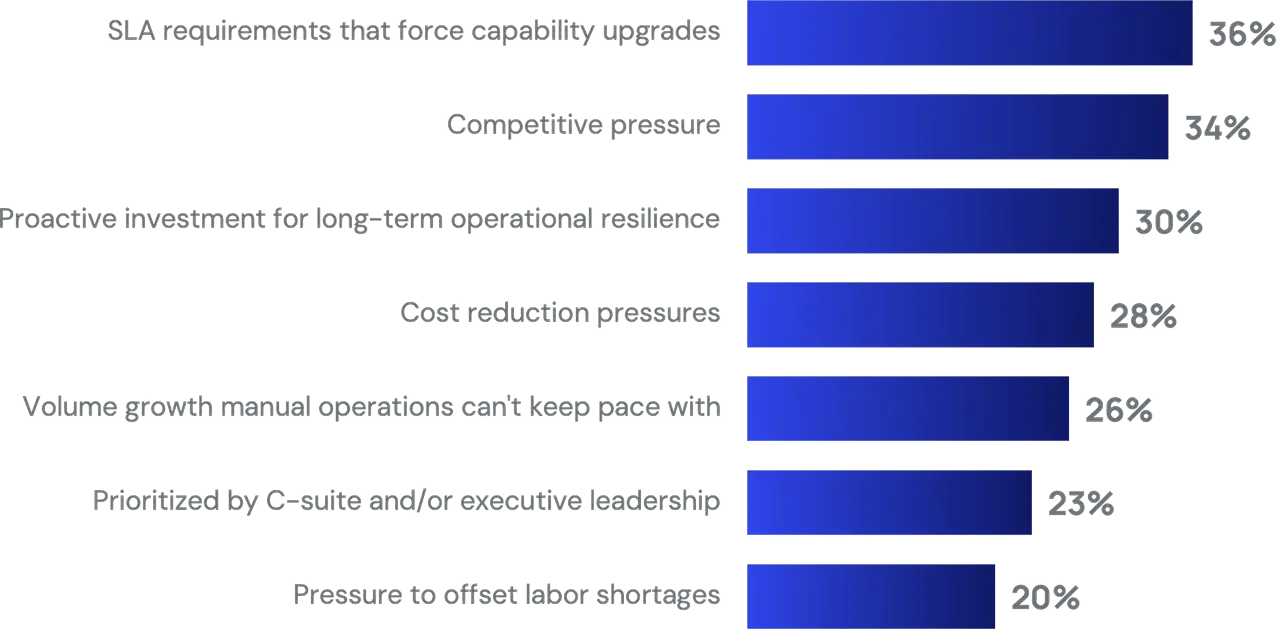
SLA Pressure and Competitive Fear, Not Cost‑Cutting, Drive Automation

As automation density increases, so does the risk of failure and downtime. Interconnected systems, faster operating cycles, and fewer human checkpoints are hallmarks of modern automation, but they also increase equipment stress and make degradation harder to detect, faster to escalate, and far more expensive to fix.

Top reasons companies automate
img-144
Base: All respondents (n=152)

Downtime Has Become the Norm

Teams aren't managing isolated incidents, they're absorbing a steady drumbeat of failures that's getting more frequent and more expensive. That's hard to square with how confident practitioners feel about catching problems early.

The trend line on downtime:
• In the past 3 years: 36% have seen more downtime events, and 32% have seen those events get more expensive
• In the next 2 to 3 years: 34% say they expect the trend to continue

icons8-clock-alert
  • 98%

    of respondents experienced unplanned downtime in the past year

icons8-expired
  • 80%

    experienced six or more unplanned downtime events affecting fulfillment, sortation, or distribution operations in the past 12 months

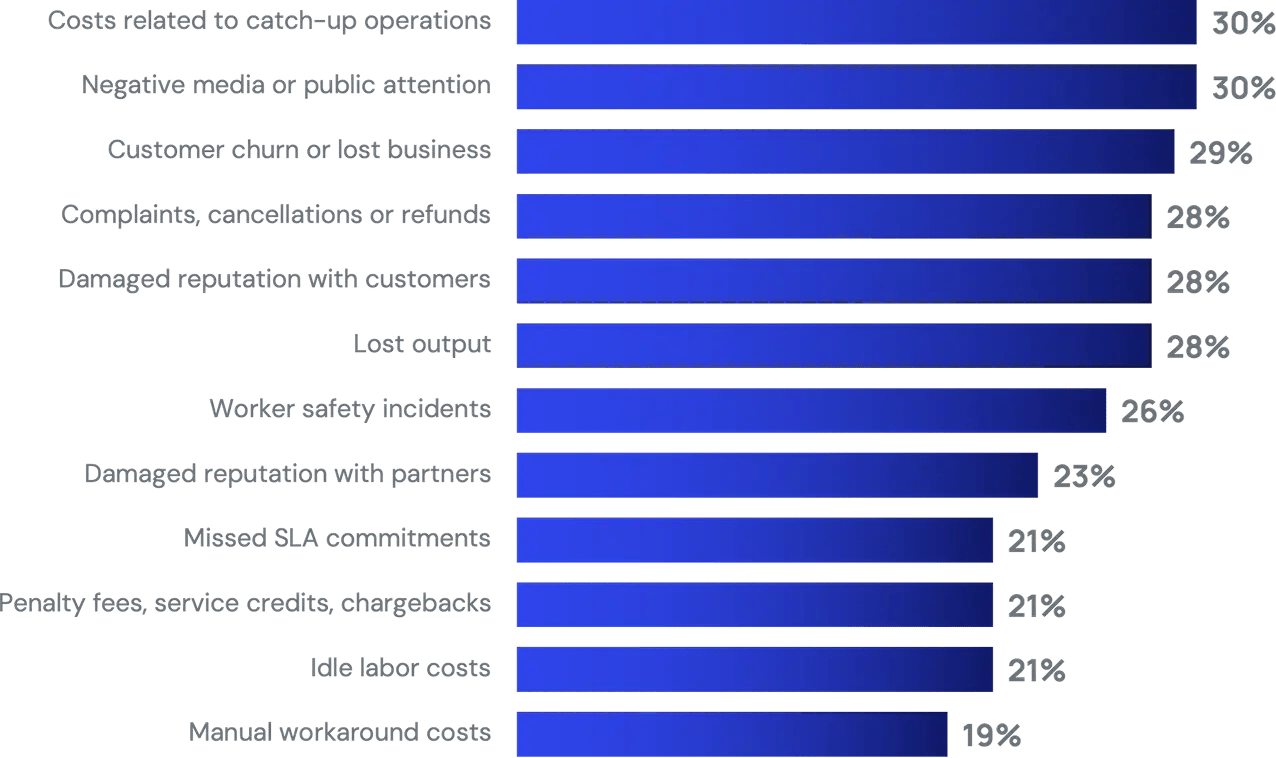
Reputational Damage Costs Facilities as Much as the Outage Itself

Downtime's costs rarely stay operational. What starts as overtime and expedited freight quickly becomes a customer and reputation problem, compounding the financial hit with lasting brand damage.

Consequences of unplanned downtime in past 12 months (selected all that apply)
img-145
Base: All respondents (n=152)

Automation Complexity, Not Budget, Is the Top Barrier to Uptime

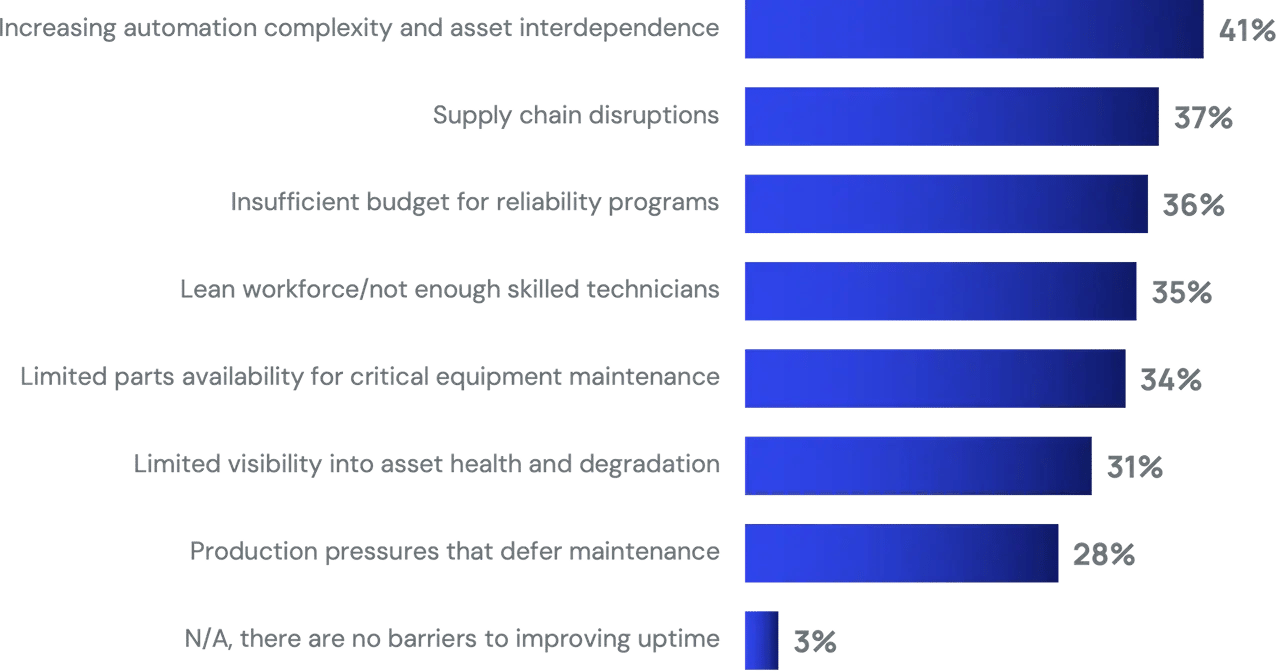
Complexity, not budget or headcount, is the top barrier: tangled, interdependent automation that makes failures harder to isolate and faster to cascade. Facilities aren't lacking effort. They're lacking visibility into complexity that's outpacing their tools.

Top barriers to improving uptime
(selected all that apply)
img-146
Base: All respondents (n=152)

What This Means

Automation is accelerating for good reason: SLA pressure and competitive necessity, not cost-cutting alone. But readiness to maintain it hasn't kept pace, and the result shows up as a steady, worsening drumbeat of downtime, with reputational and financial consequences that extend well past the outage itself. The next parts of this report dig into why that gap persists: overconfidence in monitoring (Part 2), a reliability workforce under pressure (Part 3), a boardroom that often can't see uptime at all (Part 4), and five concrete steps to close the gap (Part 5).

Get the Complete Picture

This is one part of a five-part report. See the full picture, including the workforce and boardroom findings, and five steps to close the gap.
img-143

Frequently Asked Questions

Why is warehouse and distribution automation outpacing maintenance readiness?

Automation investment decisions are typically driven by SLA pressure and competitive necessity, not reliability planning. In our survey, 97% of respondents said automation has increased at their facility over the past three years, and 91% have knowingly approved or implemented automation their team wasn't ready to maintain.

See how MultiSensor AI provide continuous condition monitoring for high-volume distribution and fulfillment centers.

Is cost-cutting the main reason companies automate warehouses and distribution centers?

No. SLA requirements that force capability upgrades (36%) and competitive pressure (34%) rank above cost reduction pressures (28%) as reasons companies automate, according to our survey of 152 reliability and maintenance practitioners and VP-level operations leaders.

How common is unplanned downtime in automated distribution and fulfillment operations?

Very common. 98% of respondents experienced unplanned downtime in the past year, and 80% experienced six or more unplanned downtime events affecting fulfillment, sortation, or distribution operations in the past 12 months.

What are the consequences of unplanned downtime beyond the immediate outage?

Costs extend well past lost output. 30% of respondents cited negative media or public attention as a consequence of downtime, on par with catch-up operations costs, and 29% reported customer churn or lost business.

What's the biggest barrier to improving uptime in automated facilities?

Automation complexity itself, cited by 41% of respondents, ahead of insufficient budget (36%) or workforce constraints (35%). Interdependent systems make failures harder to isolate and faster to cascade.

Where did this data come from?

The findings come from The Uptime Economy: 2026 Report, independent research conducted by Censuswide between May 27 and June 4, 2026. The survey included 152 US-based respondents split evenly between reliability and maintenance practitioners (engineer through director-level roles) and VP-level operations leaders, and evenly across e-commerce distribution and carrier, courier, and parcel networks. Full methodology details are available in the complete report.