
MSAI Connect Condition Monitoring Blog
TL;DR
If you manage maintenance on a conveyor line, you already know the pattern: Everything looks fine during the morning walkaround, and by early afternoon a belt is torn up, a line is down, and nobody saw it coming.
-
Conveyor belt failure usually comes down to a handful of failure modes: misalignment, tensioner wear, friction hotspots, edge and splice damage, and foreign object ingestion, and they often compound rather than happen in isolation.
-
Belts can go from a first visible signal to full failure in hours, sometimes minutes, which is faster than most inspection routes are built to catch.
-
Daily walkarounds are built mostly for visual, non-intrusive checks. They're not designed to catch what's developing inside a bearing or under a belt's surface.
-
Thermal and vibration signals typically show up well before failure, but only if something is watching between inspection rounds.
-
Closing that gap requires more than one sensing method. A single technology only tells part of the story, but multi-sensor corroboration (thermal and vibration together) tells you more than either signal could alone.
Common Failure Modes Behind Conveyor Belt Failure
Most problems can be traced back to a short list of belt failure detection modes, and they rarely show up alone.
Misalignment is the most common one. When a belt isn't tensioned and tracked correctly at installation, or during replacement or adjustment, it starts drifting off course, sometimes within days or weeks of going live. In large facilities running thousands of belts, small installation gaps add up fast.
Tensioner wear shows up as drag and uneven tension across the belt width, often physically visible as erratic movement in the tensioner itself. Though this can depend on the type of tensioner: For instance, a spring-loaded tensioner would show movement but manual tensioners would not.
Friction hotspots develop where a misaligned or under-tensioned belt starts rubbing against a frame, side-guard, or roller. This is one of the more common early indicators, since friction almost always shows up as a temperature spike first. The rate of increase will depend on the amount of contact and subsequent friction.
Edge wear and splice failure are common when belts get repaired under time pressure. Welding a belt back together is the right fix, but it takes time and precision. When operations need a line back up immediately, teams often splice or lace the belt instead, essentially stapling it together. It's fast, but the repair can be weak and prone to failing again within days if not executed properly.
Foreign object ingestion—like spillages, jams, and debris—is the one failure mode that tends to strike on its own rather than compounding with another mode. It's also the hardest to predict, since it's external to the belt itself.
Belt quality and aggressive start/stop settings compound all of the above. For instance, a belt running on an aggressive ramp-up and ramp-down cycle, or one sourced from a lower-quality manufacturer, wears out faster under any of these failure modes.
Not every one of these belt failure modes ends in a shutdown. Left alone, they often show up first as throughput loss, slower cycle times, upstream accumulation, more operator intervention, long before anything actually breaks. See how "non-critical" conveyor issues quietly cost throughput.

The Challenges of Early Belt Failure Detection
Degradation on a conveyor belt doesn't always take weeks. It can take hours. A belt that has tracked over and started catching a sharp edge on the structural frame can tear apart within a single shift, sometimes faster.
The core problem is timing. Most facilities run a short maintenance window each morning, often two hours, to check critical belts before the shift starts. That window is built for visual, non-intrusive checks: does the belt look straight, is there visible cracking or fraying, is there debris on the line? It's a process not built to catch what's happening inside a bearing or underneath the belt surface.
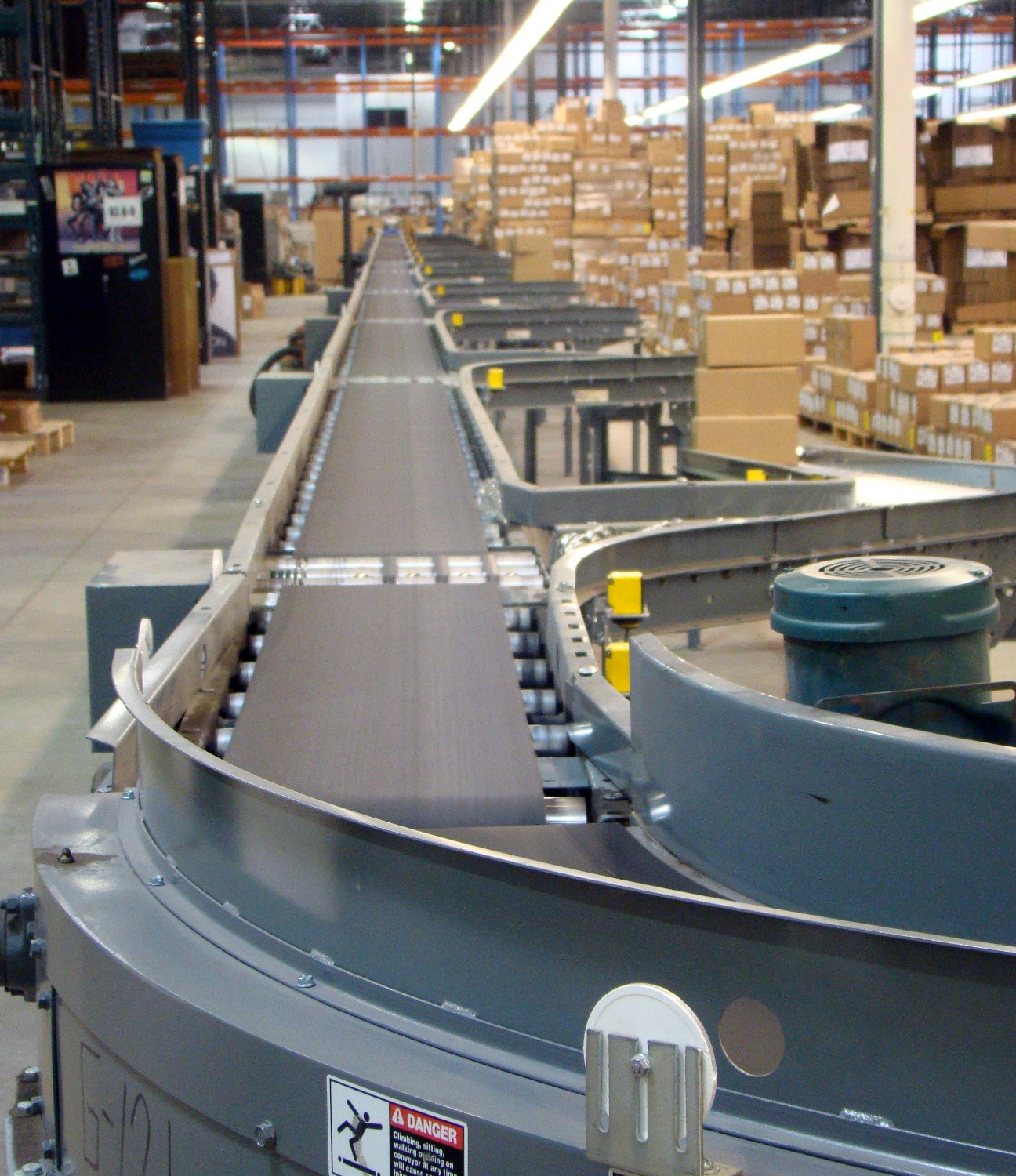
Add to that the physical reality of a busy, high-volume distribution or fulfillment environment: belts mounted within close proximity to ceilings, mezzanines, or other ancillaries. Even when a team wants to do a closer inspection, access itself can be the limiting factor.
The result is a structural blind spot, not a training or effort problem. A well-run inspection program can still miss a failure that develops between rounds.
Real-world results: Catching belt failures before they disrupt the line
A distribution facility running monthly thermal inspections faced recurring unplanned downtime. After switching to continuous condition monitoring with MSAI Connect, the team caught a belt running 20°C above normal and a belt beginning to track off-course, both repaired on a planned schedule. The estimated cost avoided in the first 30 days was $35,000, with full ROI achieved within 30 days of deployment.
Read the full case study.
What Early Warning Signals Look Like
The signals are usually there. The challenge is whether anyone is watching for them at the right time.
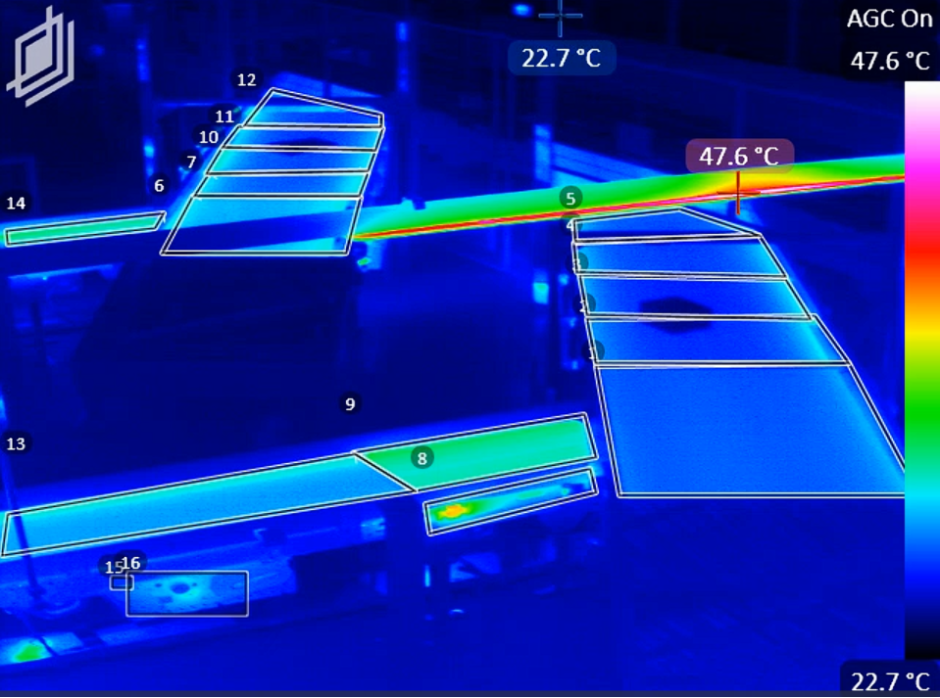
Thermal anomalies are one of the clearest indicators. A friction point shows up as a hotspot on a color scale, a rising trend line, and a breached temperature threshold, all at once. It's visual enough that a new technician can learn to recognize it quickly.
Vibration deviation is more nuanced. In spring-loaded tensioners, for example, it's often visible: erratic oscillation you can physically see if the belt has slack or lost tension. Deeper mechanical wear, like the kind found in bearings, is more hidden and shows up as vibration or acoustic changes rather than visible motion.
Not every signal is straightforward to read, either. A vibration baseline captured under a heavy load can set a false threshold. A normal start-up or ramp-down cycle can produce a vibration spike that looks like a developing fault to someone unfamiliar with that asset's normal pattern. Reading these signals accurately takes both the right sensing and the context of what “normal” looks like for that specific belt.
Continuous vs. Scheduled Monitoring for Conveyors
Scheduled inspections and condition-based monitoring routes are both useful, as they're built around intrusive versus non-intrusive limits. A visual walkaround, even a thorough one, can't see what's developing inside a component or underneath a belt. It can confirm a belt looks misaligned. It can't confirm a bearing is three days from failure.
This isn't a diligence gap. It's a structural one, the same one that undermines calendar-based inspection programs across asset types. Between inspection rounds, degradation continues whether or not anyone is looking. The only way to close that gap is to monitor conditions continuously, rather than at fixed intervals.
What a Proactive Approach Looks Like
Closing the visibility gap changes what a maintenance manager's day actually looks like. Instead of reacting to a jam or a tear after the fact, teams start working from trend data: baselines, thresholds, and early alerts that give them time to plan a repair instead of scrambling to conduct fixes during an emergency, unplanned shutdown.
That shift to proactive maintenance is strengthened when you have more than one sensing method working together. Thermal alone tells you where heat is building. Vibration alone tells you something is moving abnormally. Neither one gives the full picture by itself. Multi-sensor visibility, thermal and vibration data considered together, gives maintenance teams a more complete and more actionable read on what's actually happening to a belt and its connected components before it fails.
The payoff isn't just fewer failures. It's time back for the team: less firefighting, more capacity to plan repairs properly instead of patching them under pressure, and more time to spend on improving higher-level maintenance and reliability improvements.
Get a deeper examination of these failure patterns and see how condition-based monitoring helps make them visible to maintenance teams by watching our on-demand webinar, Catching Conveyor Degradation Before It Disrupts Throughput.
Or, if you’re ready to see how multi-sensing monitoring can help your maintenance and reliability efforts, our team is eager to explain in a quick demo—schedule it here.
FAQs:
What are the most common failure modes in conveyor belt failure?
Misalignment, tensioner wear, friction hotspots, edge or splice damage, and foreign object ingestion. Misalignment is typically the most frequent, often traced back to installation tension and tracking that wasn't set correctly from the start.
How fast can a conveyor belt go from a warning sign to full failure?
It varies by failure mode, but it can happen in hours, sometimes minutes. A belt that's tracked over and started catching a structural edge can tear apart within a single shift.
Why do routine inspections miss early signs of belt failure?
Most inspection windows are built for visual, non-intrusive checks during a fixed time block. They aren't designed to catch degradation happening inside a component or underneath a belt's surface between rounds.
What are the early warning signs of conveyor belt misalignment?
Visible drift or skew in the belt line, localized heat where the belt is rubbing against a frame or guard, and erratic movement in the tensioner are common early indicators.
Is belt splicing a reliable fix for a damaged conveyor belt?
It's a fast fix, not a lasting one. Splicing or lacing a belt gets a line running again quickly, but it's a weaker repair than welding and often fails again within days.
What's the difference between scheduled and continuous conveyor monitoring?
Scheduled monitoring relies on periodic, mostly visual checks that can miss fast-developing issues. Continuous monitoring tracks thermal and vibration conditions in real time, closing the gap between inspection rounds.
Keep reading

Condition Monitoring Reliability Engineering Blog
The $125K/Hr. Problem: Why Logistics Operations Detect Failures Too Late

Condition Monitoring Reliability Engineering Blog